Highlights
-
Performing seasonal maintenance prevents sudden mechanical failures, protects family safety and extends system longevity.
-
Inspecting moving components helps identify worn rollers, loose hinges and frayed cables before catastrophic breakage occurs.
-
Testing automatic reversal sensors and mechanical balance ensures full compliance with critical home safety standards.
-
Applying specialised lubricant to metal springs, tracks and hinges reduces friction, operational noise and component wear.
-
Cleaning track assemblies and clearing photo-eye sensors maintains smooth movement and prevents accidental obstruction triggers.
-
Scheduling professional garage door service addresses dangerous high-tension spring adjustments and complex motor repairs safely.
Why Is Seasonal Garage Door Maintenance Critical for Safety & Performance?
Proper seasonal maintenance preserves the structural integrity, smooth mechanical operation and security of your home’s primary entry point. As the heaviest moving object in most residences, a standard garage door undergoes hundreds of cycle operations each year, subjecting springs, cables and rollers to relentless physical wear. Neglecting routine care leads to misaligned tracks, noisy operation, unexpected breakdown and elevated risks of physical injury or property damage.
According to guidance published by the Chamberlain Australia Team, regular checks and maintenance prevent operational damage, protect family members from potential injuries and prolong the lifespan of the entire system. Inspecting components regularly allows homeowners to catch minor hardware fatigue early, avoiding emergency repair expenses and ensuring reliable daily performance. Partnering with a qualified garage door service for annual tune-ups complements routine homeowner care and keeps complex motorised systems operating safely.
How Do You Perform a Thorough Visual & Mechanical Hardware Inspection?
Conducting a step-by-step visual audit of your door’s physical structure and mounting hardware allows you to spot early signs of wear, rust or looseness before minor defects lead to mechanical failure.
-
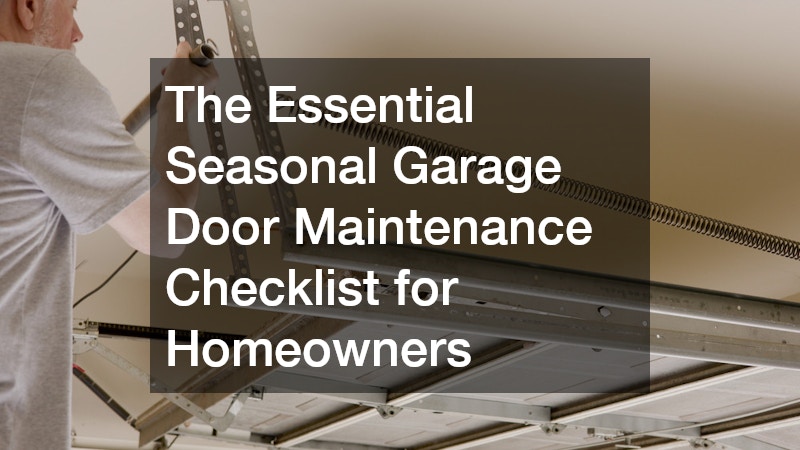
Examine Track Alignment: Inspect vertical and horizontal steel tracks for bends, dents, misalignment or rust accumulation that could bind door rollers during operation.
-
Inspect Rollers and Hinges: Check nylon or steel rollers for cracking, flat spots or excessive play and verify that all hinge brackets remain tightly fastened.
-
Check Lift Cables: Visually review the high-tensile steel cables attached to bottom brackets for fraying, snapped wire strands or corrosion without touching them directly.
-
Inspect Weather Seals: Review the rubber weatherstripping along the bottom perimeter and sides for cracking, stiffness or gaps that let moisture into the garage.
-
Audit Mounting Brackets: Ensure wall-mounting brackets, ceiling supports and opener mounting frames are securely bolted to structural wood framing without sagging.
What Is the Proper Procedure for Balancing & Testing Mechanical Tension?
A properly balanced garage door should open smoothly with minimal force and remain stationary when resting partially open. To test system balance safely, close the door completely and pull the emergency release cord to disengage the automatic opener drive arm. Manually raise the door roughly three feet off the ground and carefully release your grip. If the door stays in place supported by spring tension, the system is balanced; if it slams shut or snaps upward, the springs are improperly tensioned.
According to safety guidance provided by Slide and Glide Garage Doors, an unbalanced door forces the opener to work harder and risks serious injury if high-tension springs are misaligned or degraded. Because torsion and extension springs operate under immense mechanical tension, homeowners should never attempt to adjust, tighten or replace door springs themselves.
How Do You Test Automatic Reversal & Photoelectric Safety Sensors?
Testing your opener’s safety features guarantees that closing doors immediately reverse direction upon encountering an obstruction in their downward path. Place a solid object, such as a 40mm wooden block, directly on the garage floor in the door’s central travel path. Using your wall console or remote transmitter, activate the opener to close the door completely onto the wooden block.
As detailed in compliance standards highlighted by Gold Coast Garage Door Repair, Australian regulatory standards mandate that auto-reversal and infrared safety beams trigger immediate door reversal within milliseconds of encountering a barrier. Next, test the photoelectric eye sensors mounted near the floor on either side of the door frame. Wave an object between the infrared light beams while the door closes; if the door fails to stop and reverse instantly, clean the lenses, realign the sensor brackets or seek professional repairs immediately.
What Routine Lubrication & Cleaning Practices Prolong System Lifespan?
Establishing a regular schedule for cleaning and lubricating moving hardware significantly reduces mechanical friction, eliminates operational squeaks and protects metal surfaces from moisture damage.
-
Lubricate Torsion Springs: Apply a light coating of specialised garage door spray lubricant across the full length of steel springs to reduce coil friction.
-
Coat Rollers and Hinges: Spray lubricant directly onto roller stem bearings and hinge pivot points while wiping away any excess fluid to prevent dripping.
-
Clean Roller Tracks: Wipe the inside of steel tracks using a damp cloth or mild degreaser to remove dirt, grease and debris without adding wet lubricants.
-
Clean Safety Sensor Lenses: Gently wipe dust, cobwebs and moisture off photo-eye glass lenses using a soft microfiber cloth to prevent optical signal disruption.
-
Wipe Down Panel Surfaces: Wash exterior door panels using mild detergent and water to clear road salt, grime and environmental contaminants that cause surface corrosion.
When Should Homeowners Call a Professional Garage Door Service for Repairs?
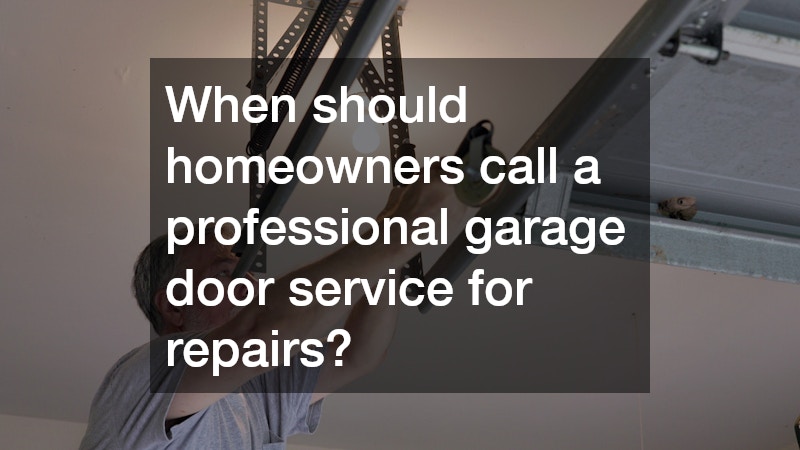
Maintaining your residential garage door through structured seasonal checks is an essential responsibility for every homeowner. By routinely inspecting hardware, testing automatic safety reversal systems, cleaning track channels and lubricating moving parts, you protect your household from unexpected mechanical failures and expensive emergency repairs.
While simple preventive care preserves smooth day-to-day operation, recognising when to defer complex high-tension adjustments to certified professionals keeps your family safe. Prioritising consistent seasonal maintenance guarantees that your garage door remains a secure, quiet and dependable entryway for your home for years to come.