When an Australian summer takes hold, heatwaves bring days of relentless sunshine and soaring ambient temperatures. For many households, keeping the indoor climate bearable means running the air conditioner continuously from morning until well after sunset. While modern split systems and ducted cooling provide immediate relief, relying on them heavily comes at a steep price, causing quarterly energy bills to skyrocket.
Air conditioners struggle to keep homes cool when heat continuously penetrates the building envelope. Without an effective thermal defence, your home operates like an oven, trapping heat inside and forcing your cooling systems to draw excessive electricity.
Investing in high-grade thermal barriers is the most effective way to stop heat before it enters, dramatically reducing reliance on air conditioning and slashing energy costs.
Understanding Heat Ingress in Australian Homes
To understand why homes get so hot, it helps to examine how thermal energy travels through a structure. Heat transfer occurs in three ways: conduction, convection and radiation.
During hot summer days, radiant heat from the sun hits the exterior surfaces of your home, particularly the roof and sun-exposed walls. Metal roof sheets and concrete tiles absorb this solar energy, often reaching surface temperatures exceeding 70°C. That absorbed thermal energy conducts straight through building materials into the roof cavity and living areas.
In an uninsulated or poorly insulated property, the ceiling acts as a giant radiator, beaming heat down into bedrooms and living spaces. As a result, your air conditioner works overtime just to fight against the steady stream of heat entering through the ceiling and walls.
The Ceiling Cavity: Ground Zero for Summer Heat
The roof space is responsible for up to 35% of a home’s total heat gain during summer, according to our experts. Because warm air rises and collects in the ceiling cavity, an uninsulated roof space creates a persistent thermal load directly above your head.
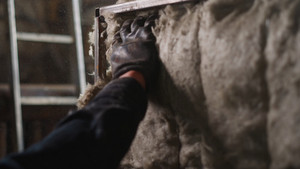
Installing high-density roof insulation breaks this cycle. Bulk insulation batts, typically composed of glasswool, rockwool or polyester, trap millions of microscopic air pockets within their dense matrix. These trapped pockets drastically slow down conductive heat flow, preventing radiant warmth from penetrating the plasterboard ceilings below.
By establishing a robust defence line in the roof cavity, quality roof insulation keeps the air inside your living areas significantly cooler naturally. This means your air conditioner reaches its set target temperature much faster and cycles off more frequently, using a fraction of the electricity.
Decoding R-Values for Maximum Efficiency
When selecting materials to combat severe climate conditions, understanding “R-values” is essential. The R-value measures a material’s resistance to heat flow—the higher the number, the greater the thermal resistance.
In warmer Australian regions, such as Queensland, Western Australia and Northern New South Wales, meeting minimum building standards is rarely enough to deliver true energy efficiency.
-
Standard Minimums (R2.5 – R3.0): Offer basic compliance but still allow noticeable heat transfer during extreme, multi-day heatwaves.
-
Optimal Upgrades (R4.0 – R6.0): Provide maximum thermal defence, blocking up to 90% of heat transfer through the ceiling space.
Upgrading to higher R-value materials ensures your home remains resilient against severe heatwaves while delivering long-term savings on your quarterly electricity statements.
Combining Bulk Batts With Reflective Foil Sarking
While bulk batts excel at stopping conductive heat, combining them with reflective foil sarking creates an unbeatable defence system against the Australian climate.
Reflective foil sarking is installed beneath roof tiles or metal sheeting during construction or re-roofing. It features a mirror-like aluminium surface that reflects up to 97% of radiant solar heat away from the roof cavity before it can be absorbed.
When reflective sarking and thick bulk roof insulation work in tandem, they address both radiant and conductive heat. This dual-action approach maintains a far lower temperature inside the ceiling cavity, protecting living spaces below even during peak midday sun.
Additional Benefits: Sound Dampening and Winter Warmth
While controlling cooling costs during summer is a primary motivation for homeowners, upgrading thermal protection yields year-round advantages:
-
Winter Energy Savings: The same thermal barrier that keeps heat out during summer keeps warm air trapped inside during winter, reducing gas and electrical heating costs.
-
Acoustic Dampening: High-density acoustic batts absorb external noise, dampening the sound of heavy rain on tin roofs, neighbourhood traffic and aircraft.
-
Reduced Carbon Footprint: Lowering your household energy consumption directly reduces greenhouse gas emissions, making your home more sustainable.
Stop Paying to Fight the Heat
Running an air conditioner in an uninsulated home is like driving a car with the windows down while the heater is blasting. It wastes energy and costs a fortune.
By upgrading your home’s thermal envelope with high-quality insulation, you create a permanent, passive shield against extreme Australian weather. You will enjoy a consistently comfortable indoor environment, protect your cooling appliances from premature wear and enjoy significantly lower power bills for decades to come.